Best AI Brand Monitoring Tools in 2026: Compared
AI brand monitoring tools compared for agencies: which ones let a client report open into the stored AI answer, the cited source, and the next step.
What is the best AI brand monitoring tool for agencies in 2026?
The best AI brand monitoring tool for agencies is SE Visible by SE Ranking, because each brand mention in a client report opens into the stored AI answer and the pages that answer cited. For narrower jobs, Peec AI suits account teams that log the objections AI raises about clients, Profound suits enterprise clients with strict vendor vetting, Otterly.AI suits adding AI checks to many smaller retainers, Semrush AI Visibility Toolkit suits agencies already reporting SEO from Semrush, and Brand24 suits clients who want press and AI read together. The full comparison is below.
Clients have started to count this channel. 48% of buy-side decision-makers already measure, or plan to measure, brand visibility or citations in AI tools, so clients now expect AI brand monitoring in their reporting.
A mention count doesn't explain itself, though. When it drops, the client wants the answer that changed, the page the engine cited, and the plan for next month. Each tool below is judged on how fast it gets an account team to all three.
How I judged AI brand monitoring tools for client reporting
Every AI brand monitoring number in a client report has to answer three follow-up questions: show me the answer, why did this move, and what are you doing about it. A number that fails any of them can't be defended, so I turned them into five tests.
- Show me the answer: every mention or tone figure opens into the stored, dated AI answer behind it.
- Why did this move: cited sources come with enough data to name the page that changed.
- What are you doing about it: the finding ends in a task, a recommendation, or an export.
- Many clients, one workflow: a separate project per client, enough seats, and client-facing access or shareable dashboards.
- Reporting pipes: a Looker Studio connector, an API, or exports, so the number lands in your agency's own report.
I scored these eight AI brand monitoring tools on the five tests, using each vendor's own pages.
AI brand monitoring tools compared
The table compares all eight AI brand visibility tools on who each fits, how results reach the client report, which engines each covers, and the entry price. Ranks follow the cards below, with SE Visible first for agency client reporting.
| Rank | Tool | Best for | Client reporting | Engines | Starting price |
|---|---|---|---|---|---|
| 1 | SE Visible | Agencies reporting AI answers | Client access, Looker Studio, API | ChatGPT, Gemini, AI Mode, AI Overviews | Plans on visible.seranking.com |
| 2 | Peec AI | Perception and fact checks | Unlimited users, Looker on Advanced | 3 per plan | $95/mo |
| 3 | Rankscale | Dashboards on one credit pool | Share links, white-label on Growth | ChatGPT, Gemini, AI Mode, +6 | $99/mo (Pro) |
| 4 | Profound | SOC 2 enterprise accounts | CSV/JSON, API on Enterprise | Up to 10 (Enterprise) | Free trial; Enterprise custom |
| 5 | Otterly.AI | A workspace per client | Dashboard connector, API from Standard | 3 of 7 (self-serve) | $29/mo |
| 6 | Semrush AI Visibility Toolkit | Per-domain narrative recaps | Weekly Brand Performance reports | ChatGPT, AI Mode (tracking) | $99/mo |
| 7 | Ahrefs Brand Radar | Prospect audits before signing | Index reports, campaign tags | 6 platforms, Claude on custom prompts | $50/mo (custom prompts) |
| 8 | Brand24 | PR-led coverage reports | Brand Score with press, social | ChatGPT, Gemini, Claude, Perplexity, +2 | Chatbeat from $99/mo |
Why does an AI brand mention need its source in a client report?
An AI brand mention or a shift in tone can only be explained through the pages the engine cited. The source is where agencies act: a client page to update, a publication to brief, a review profile to correct. Without it, AI brand monitoring tools report a number nobody can move.
Paid presence doesn't settle this. SE Ranking's study of ads in AI Mode found that in 88% of ad keywords, the advertiser's domain wasn't among the sources AI Mode cited. The source list is its own surface to report.
What the client asked: why did this move? The AI answer is often all the buyer reads, since users clicked a traditional search result in 8% of visits with an AI summary, versus 15% without one. The client report has to show that answer and its sources together.
The 8 best AI brand monitoring tools in 2026
SE Visible ranks first because each number in it opens into the stored AI answer, its tone, the rivals it named, and the sources it cited. The other seven AI brand monitoring tools rank by how many follow-up questions they answer without extra work.
1. SE Visible: best AI brand monitoring tool
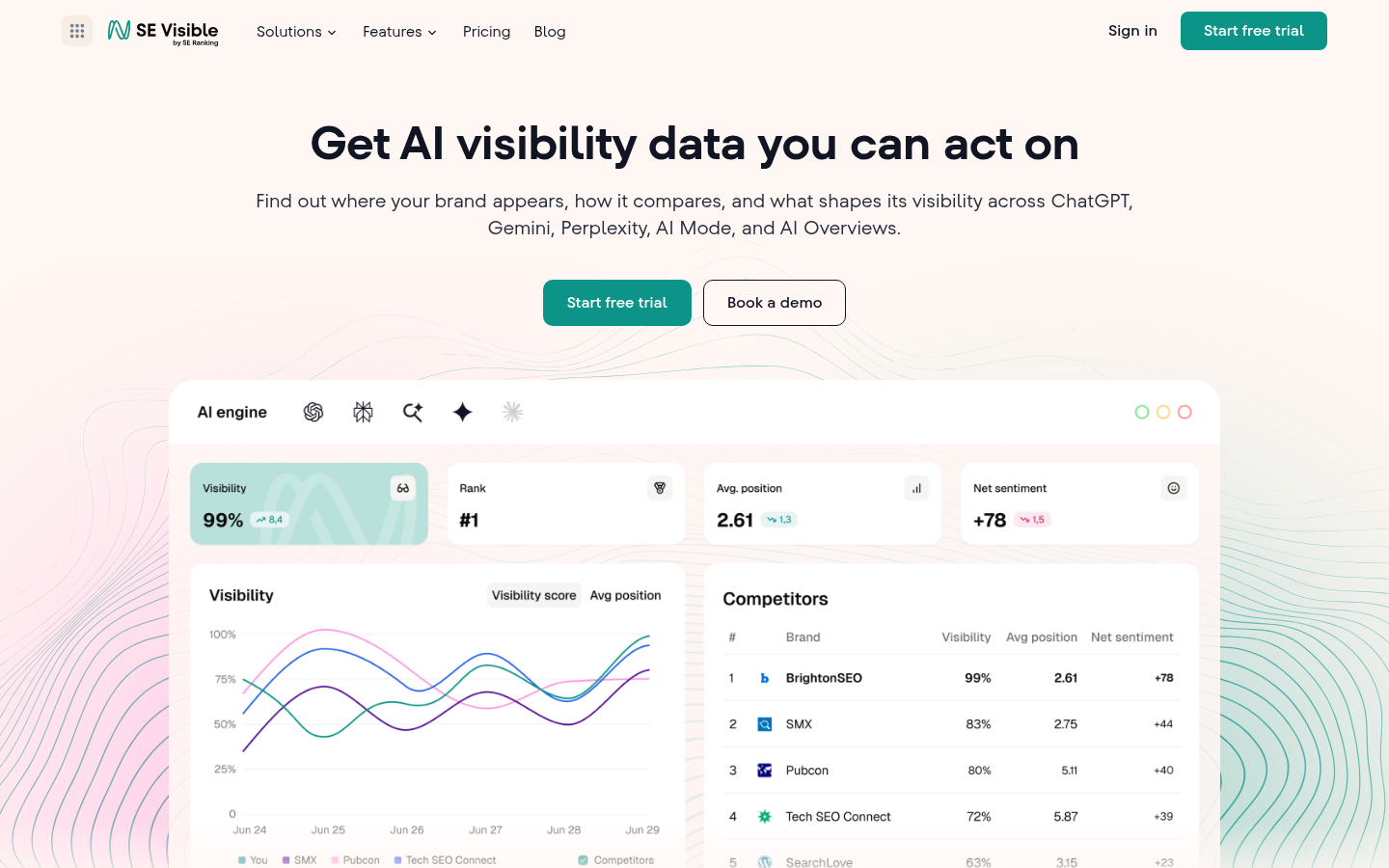
Open a drop in a client's share of voice, and it expands into the answers behind it, each saved with its date. SE Visible by SE Ranking is an AI visibility platform that checks ChatGPT, Gemini, Google AI Mode, and Google AI Overviews daily by default, per client project and market.
Each mention carries more than a tally: the answer's net sentiment, the rivals beside the client, and the cited pages. That settles "show me the answer" and "why did this move" from evidence. Those cited sources carry SEO data: domain traffic, Domain Trust, and backlinks. Its team applies over a decade of search work to AI answers.
Best for: agency account teams walking clients through AI answers monthly.
Standout: A share-of-voice change opens into the dated answers that moved it, tone and competing brands included. Agents (Beta) turn a gap into a task, a page to write or a third-party mention to earn, so the account team arrives with a next step.
Pros:
- Gives clients their own role-based access, with unlimited users
- Sends the numbers into Looker Studio, the API on every plan, and MCP
- Mails a weekly summary between client reports
Cons:
- Covers AI visibility; SE Ranking handles rank tracking, keyword research, and site audits
- Claude and Copilot are on the roadmap, not tracked today
Pricing: Plans are listed on visible.seranking.com, and a free trial is available.
In the readout: For AI brand monitoring, SE Visible gets past the mention count to the evidence a client asks for next. It gives direction; the call stays with the account team.
2. Peec AI
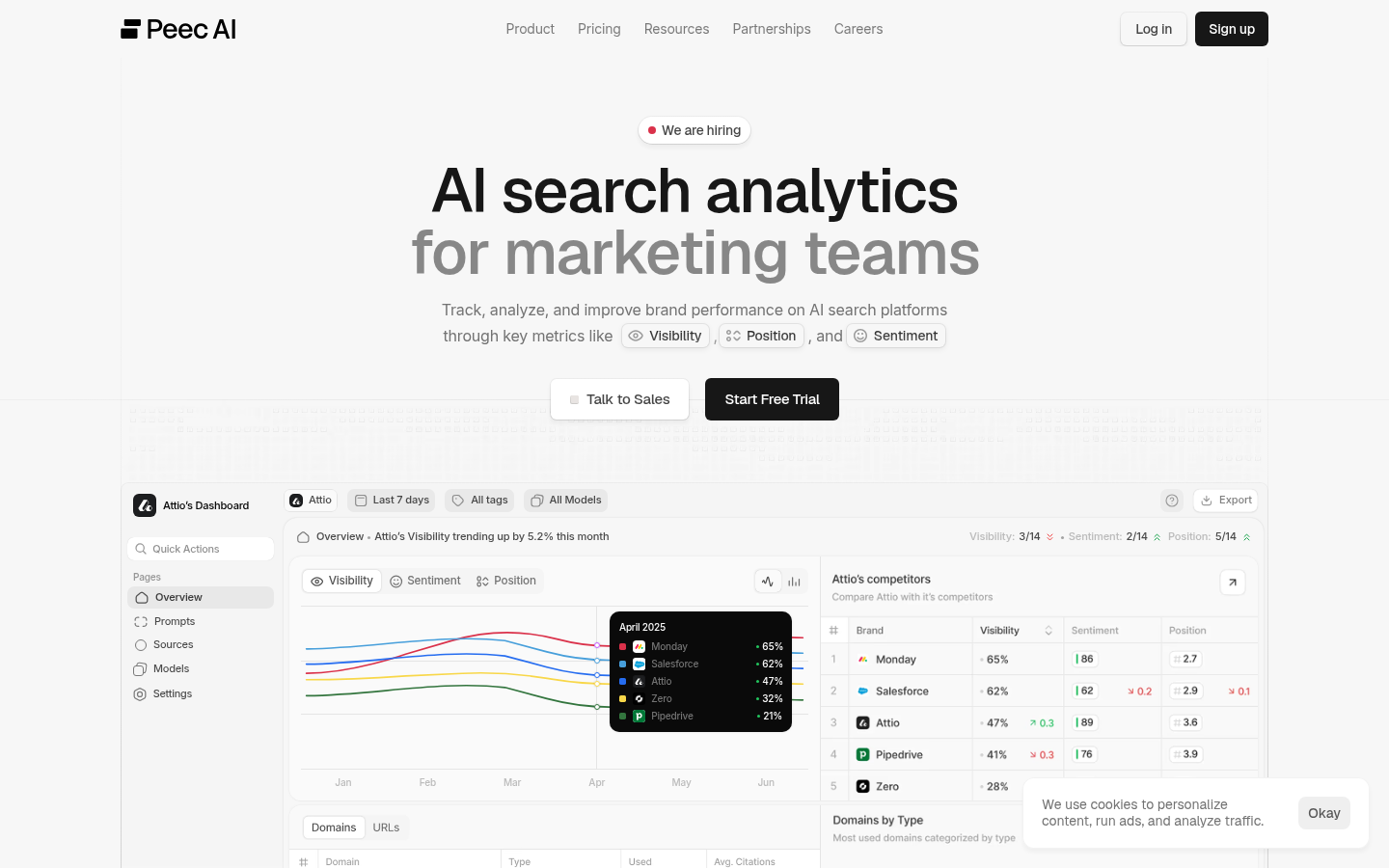
Peec AI catches the objections AI engines hold against a client brand, and the sources behind them.
Best for: account teams that bring client objections into the monthly report.
Standout: The Objections view, refreshed monthly on Pro and weekly on Advanced, lists the concerns AI answers raise about the brand. Source analytics, gap analysis and recommended actions sit beside it, so each objection can point to its source pages and a fix.
Pros:
- Has no cap on users
- Checks answers against facts you set
- Opens API from Pro, Looker Studio on Advanced
Cons:
- Caps projects at 1, 2 and 5, limiting clients per plan
- Three models per plan; more cost from $30
Pricing: 15% off annual billing; Starter $95/mo (50 prompts), Pro $245/mo, Advanced $495/mo.
In the readout: Peec AI names the objection and its source when AI answers turn cautious on a client. A long client roster spreads across several plans or Enterprise.
3. Rankscale
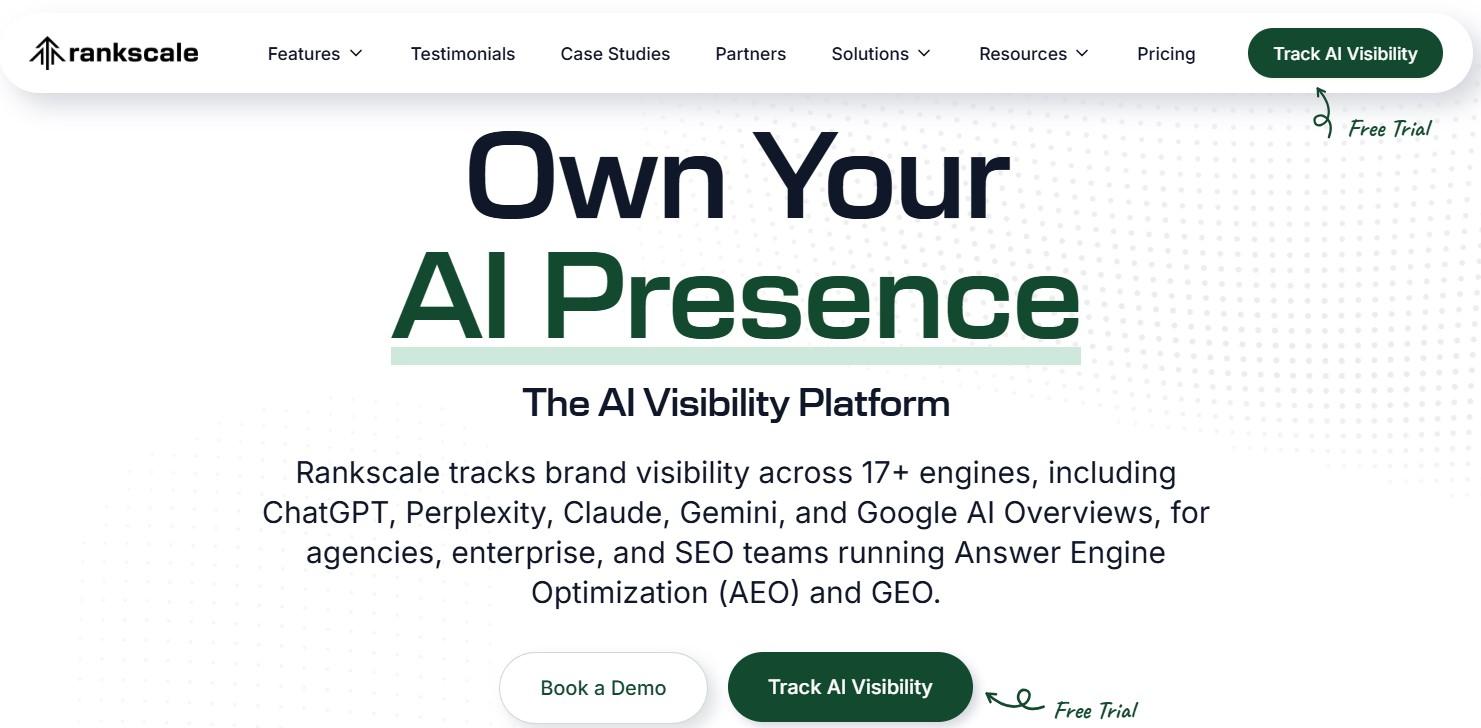
Rankscale runs AI brand tracking for every client from one shared credit pool, dashboard by dashboard.
Best for: agencies watching many small client accounts at once.
Standout: Pro includes 1,200 credits and 10 brand dashboards; Growth raises that to 5,500 and 50. Most engines cost about 0.25 credit per prompt run, on schedules from hourly to monthly, so quiet and launch-week client accounts share one balance.
Pros:
- Shares live dashboard links on every plan
- Tracks Claude and Copilot beside ChatGPT
- Includes sentiment, CSV exports and MCP on Pro
Cons:
- Cost follows engines and frequency: Claude takes 2 credits a run
- White-label links need Growth; REST API starts at Pro+
Pricing: Pro $99/mo (1,200 credits), Pro+ $229/mo, Growth $385/mo; 15% off yearly.
In the readout: The client opens the same dashboard you report from, which settles most "show me" questions. Cost control is the limit: a Claude run costs eight times a ChatGPT run.
4. Profound
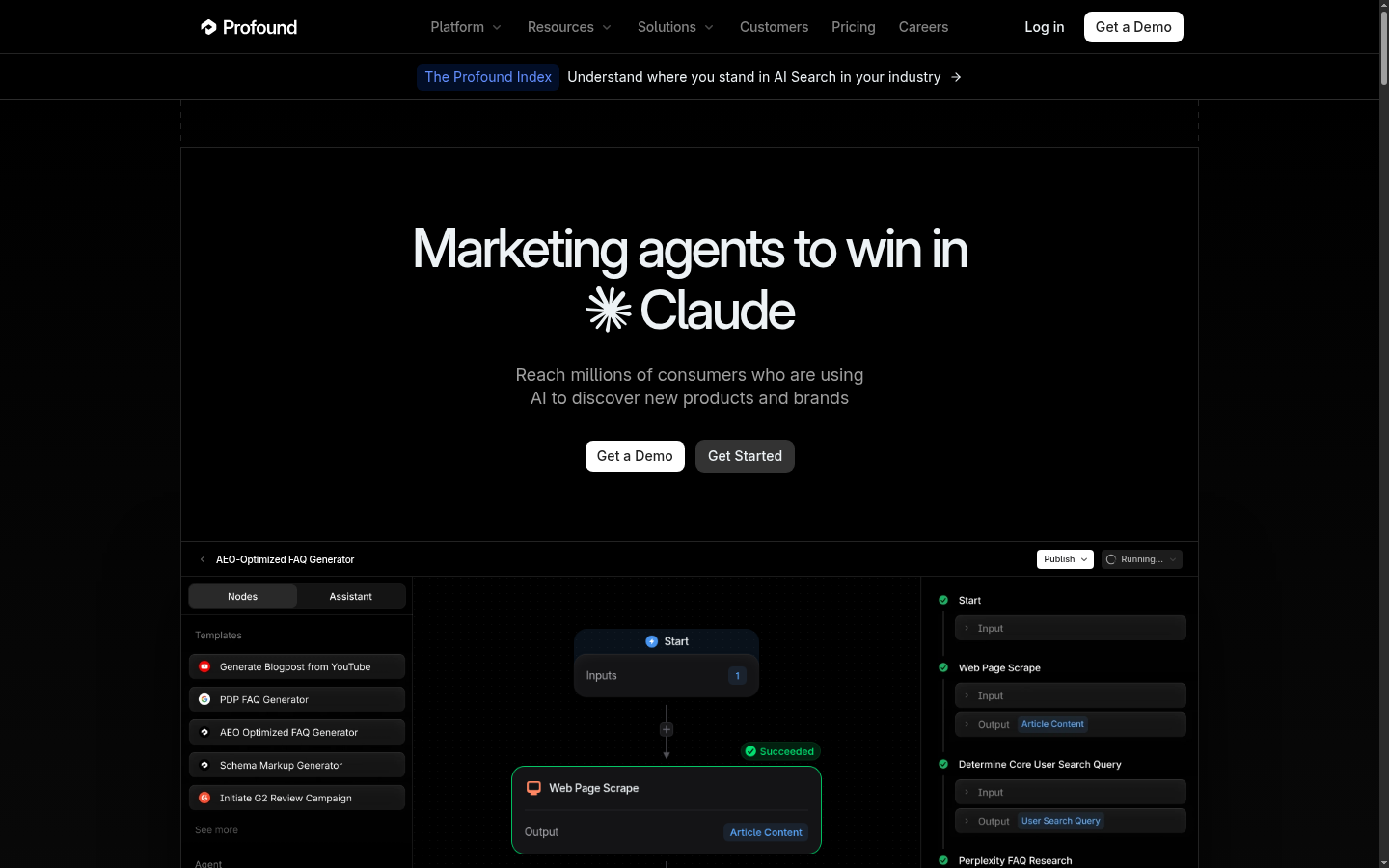
Profound sells separate brand and agency plans, and the tier that holds up in client readouts is Enterprise.
Best for: agencies whose enterprise clients run security reviews.
Standout: Enterprise keeps prompt history for all time, so quarter-over-quarter questions from the client have stored answers. It covers up to 10 answer engines and exports CSV or JSON. AI Marketer agents work from brand facts held in Context Manager.
Pros:
- Clears vendor questionnaires with SSO/SAML and SOC 2
- Includes unlimited seats on every plan
- Offers AI Marketer credits per client workspace on Agency Growth
Cons:
- The trial's fixed industry prompts can't test the client's own
- Brand-plan history, exports, and API start at Enterprise
Pricing: Free 7-day trial; Enterprise custom; self-serve Agency Growth plan (no price listed).
In the readout: On Enterprise, last quarter's stored answer sits beside this month's when the client asks why a mention moved. The trial stops short: no history, and none of the client's prompts.
5. Otterly.AI
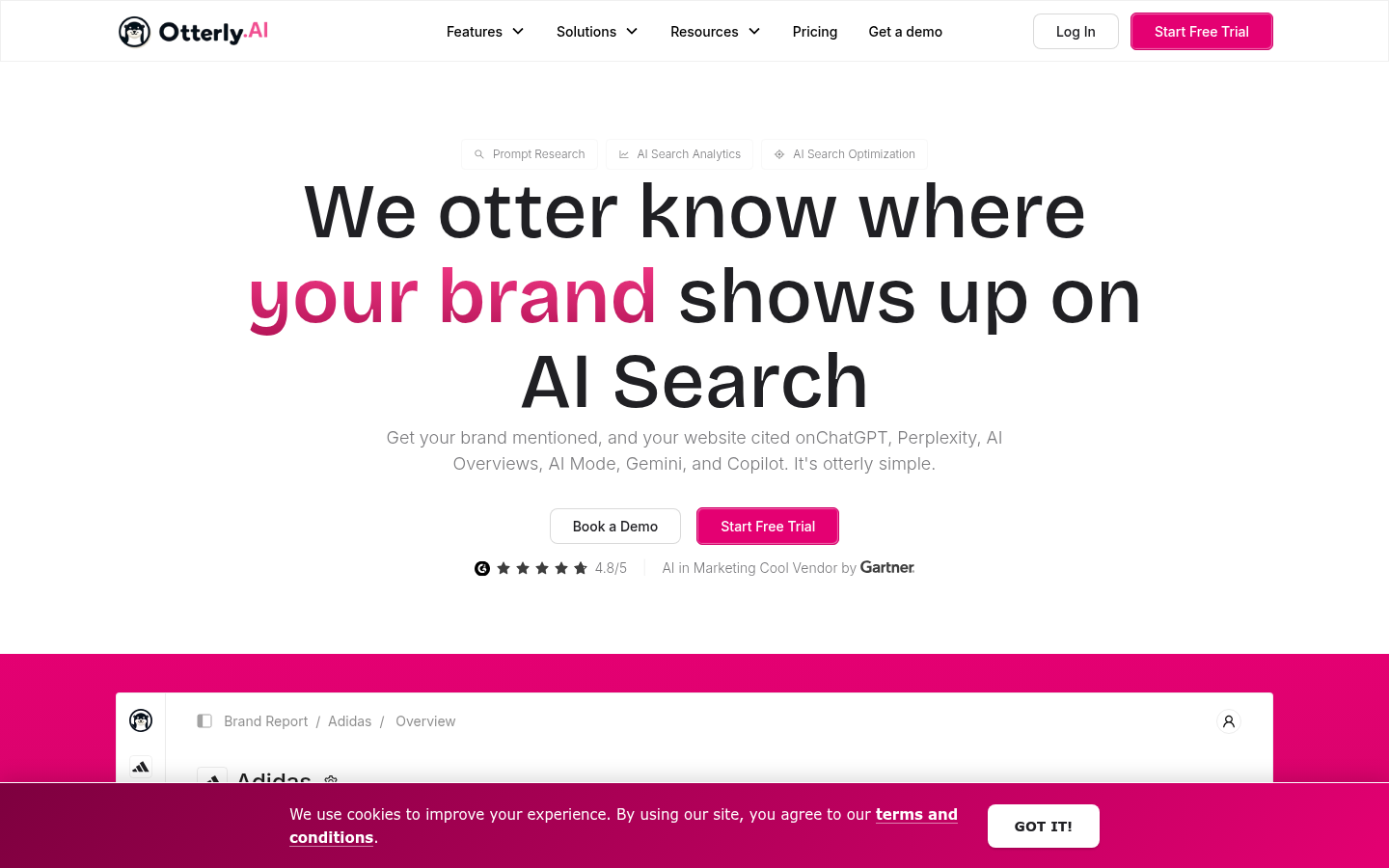
Otterly.AI gives every client its own workspace from the Standard plan, with no cap on accounts.
Best for: adding AI answer checks to a book of mid-size retainers.
Standout: Standard opens unlimited workspaces, so each retainer keeps its own prompts, sentiment scores, and the sources AI answers cite. API and MCP access come on the same plan, plus a dashboard connector for the client report templates you already use.
Pros:
- Logs sentiment beside each tracked prompt
- Traces which pages AI answers cite
- Checks client pages for crawlability and content
Cons:
- Reads three of seven engines on self-serve plans
- Standard's 160 prompts spread thin: across ten clients, that's 16 each
Pricing: Lite $29/mo (20 prompts), Standard $189/mo (160), Premium $489/mo (535).
In the readout: Otterly answers "show me the answer" and "which page" for each client's AI brand tracking. On "what are you doing about it," the GEO audit flags pages; the prompt budget caps depth.
6. Semrush AI Visibility Toolkit
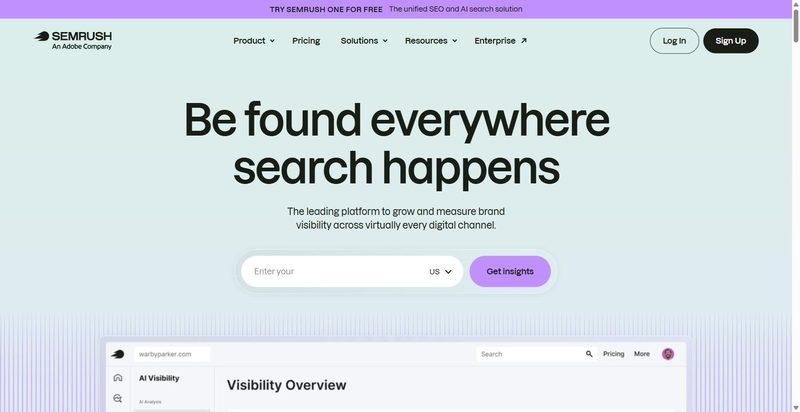
Semrush's AI Visibility Toolkit puts AI answer tracking inside the suite agencies may already use for client SEO reports.
Best for: agencies whose SEO reporting already comes out of Semrush.
Standout: Prompt Tracking checks 25 prompts a day across Google AI Mode, ChatGPT, and others. Brand Performance sets the client's share of voice, sentiment, and main narratives against rival brands. Prompt Research and an AI Search Site Audit sit under the same login.
Pros:
- Keeps AI data beside familiar SEO data
- Stores daily prompt results
- Suggests new prompts to track
Cons:
- Every extra client domain adds $99 a month
- Narrative reads refresh weekly, while prompt tracking runs daily
Pricing: No free trial; $99/mo (1 domain, 25 prompts).
In the readout: The narrative view gives a first answer when sentiment slips on a client's account. Across many accounts, though, per-domain fees stack up, and a weekly narrative can trail a daily prompt that already changed.
7. Ahrefs Brand Radar
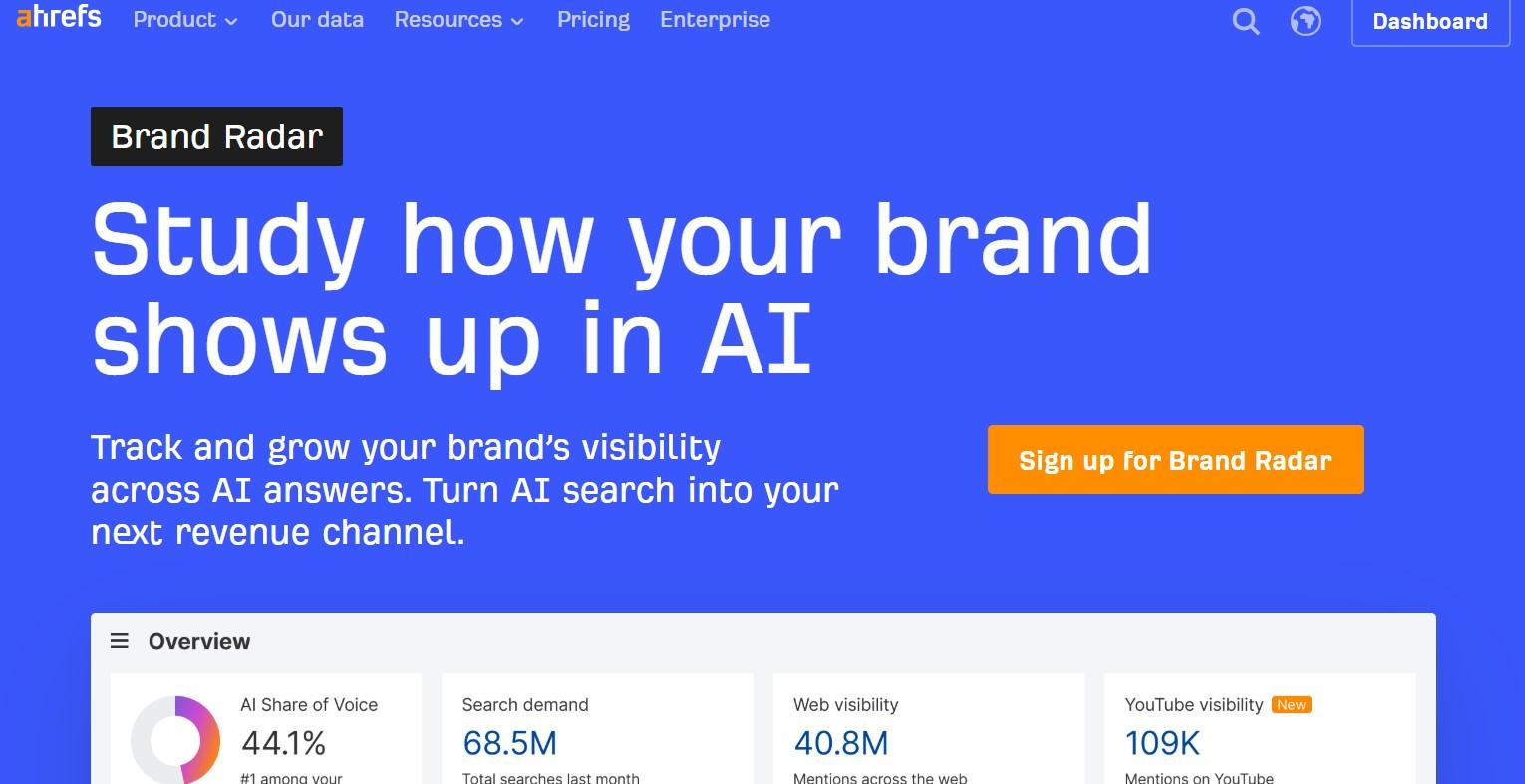
Ahrefs Brand Radar pairs a 565 million+ prompt index with custom prompts, showing a prospect's AI footprint before kickoff.
Best for: prospect audits and pitch decks before a client signs.
Standout: The AI Visibility Index needs no setup and keeps history back to 2025, so a prospect's mentions, citations, and aspect-level sentiment are ready for the first pitch. Custom prompts then run daily, weekly, or monthly per platform, with Claude added on that side.
Pros:
- Benchmarks brands without setup
- Tags prompts by topic, funnel, or campaign
- Shows fanout queries
Cons:
- Index data is re-tested monthly, so month-to-month client deltas need custom prompts
- Index and custom prompts are priced separately
Pricing: Custom prompts from $50/mo ($699/mo for all models); AI Visibility Index $199/mo.
In the readout: In a pitch, the index answers "where do we stand?" Later, when a number moves between monthly index runs, that index has no answer. Custom prompts, re-run daily or weekly, do.
8. Brand24
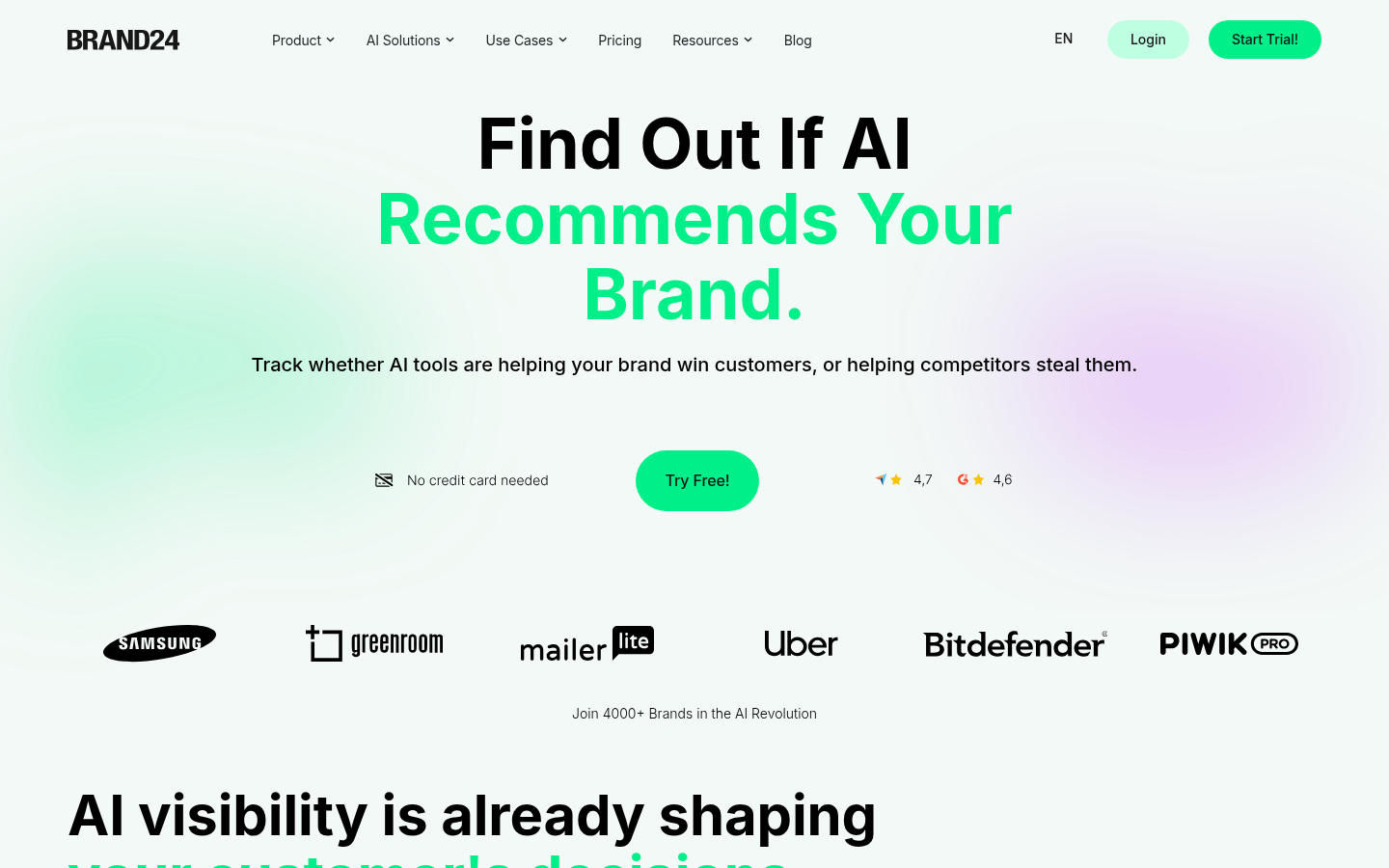
Brand24 tracks press, social, and review mentions, while sister product Chatbeat adds AI answers for PR teams reporting both.
Best for: PR-led accounts where AI answers join the coverage report.
Standout: Chatbeat handles brand monitoring for AI results: it lists the sources each model cites and splits share of voice across ChatGPT, Gemini, Perplexity, Claude, DeepSeek, and Grok. Its Brand Score blends presence, position, sentiment, and citations into one figure for account teams.
Pros:
- Covers news, forums, podcasts, and reviews
- Compares clients with competitors
- Turns gaps into GEO recommendations
Cons:
- Entry Chatbeat plan covers one project and two seats
- Press and AI data sit in two products
Pricing: Brand24 plans from $199/mo billed annually; Chatbeat from $99/mo (30 prompts).
In the readout: A PR client asking what AI says about a launch gets an answer beside the coverage clips. A multi-client roster outgrows a one-project entry plan, and the AI view lives outside Brand24.
Which AI brand monitoring tool should an agency choose?
For most agencies comparing AI brand visibility tools, start with SE Visible by SE Ranking. A client report built on it can open the stored answer, trace a move to the cited page, and set the next step, which covers all three follow-up questions.
Peec AI fits accounts driven by client objections, Rankscale suits many small client dashboards, and Ahrefs Brand Radar covers prospect audits.
Skip if: you report on many client domains (Semrush AI Visibility Toolkit adds $99 per extra domain), or want Profound's trial for client reporting (no custom prompts, no history).
The readout has to survive the follow-up question. Give SE Visible a try for client reports. SE Ranking covers the SEO side (rankings, audits, keyword research); the two are complementary.
FAQ about AI brand monitoring for agencies
How do you report AI brand mentions to a client?
Report what changed and the proof behind it. For each shift in AI brand mentions, show the stored answer, the pages the engine cited, and the competitors named beside the client. Then name your team's next step. Keep it to one page, with every number opening into its evidence.
Are there free AI brand monitoring tools?
Yes, in a limited form. Free trials and one-off checks show how AI engines describe a brand today, which suits a first audit or a pitch. Monthly client reporting needs stored answer history, chosen prompts, and a project per client, which sit on paid plans. SE Visible offers a free trial.
Why monitor brand mentions in AI search results?
Buyers read the AI answer before they click a link. The same prompt can name a different brand from one run to the next, so a single check misleads. Steady brand monitoring for AI results shows the pattern, and the source cited behind each mention is where a fix starts.